Whetstone #1000 / #3000 / #8000
- Regular price
- ¥7,500
- Regular price
-
- Sale price
- ¥7,500
- Unit price
- per
Couldn't load pickup availability
Share
- Weight: approx. 980g
Made by the knife shop in Sakai, Osaka that forges the blades for the Indigo Bocho.
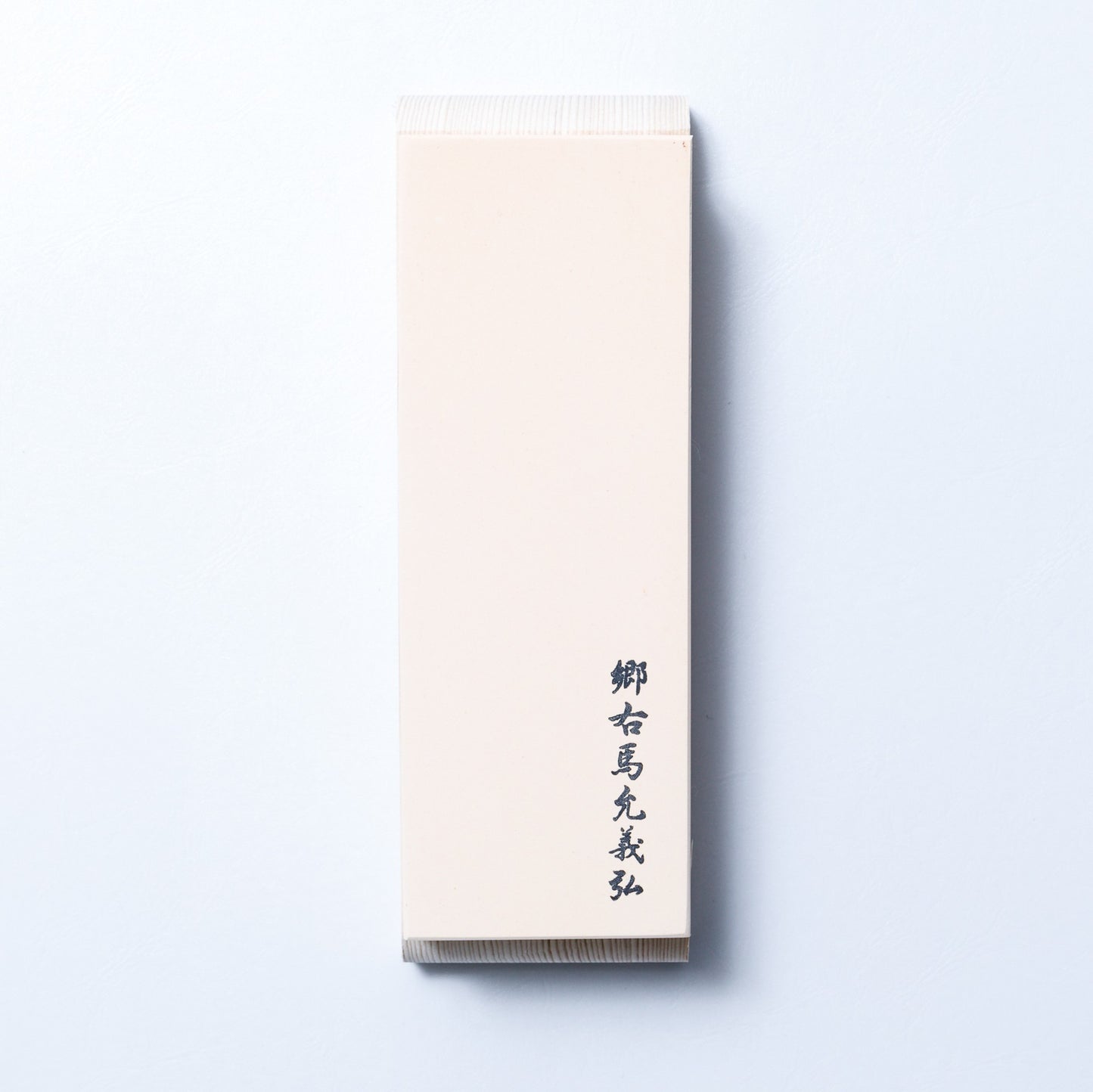
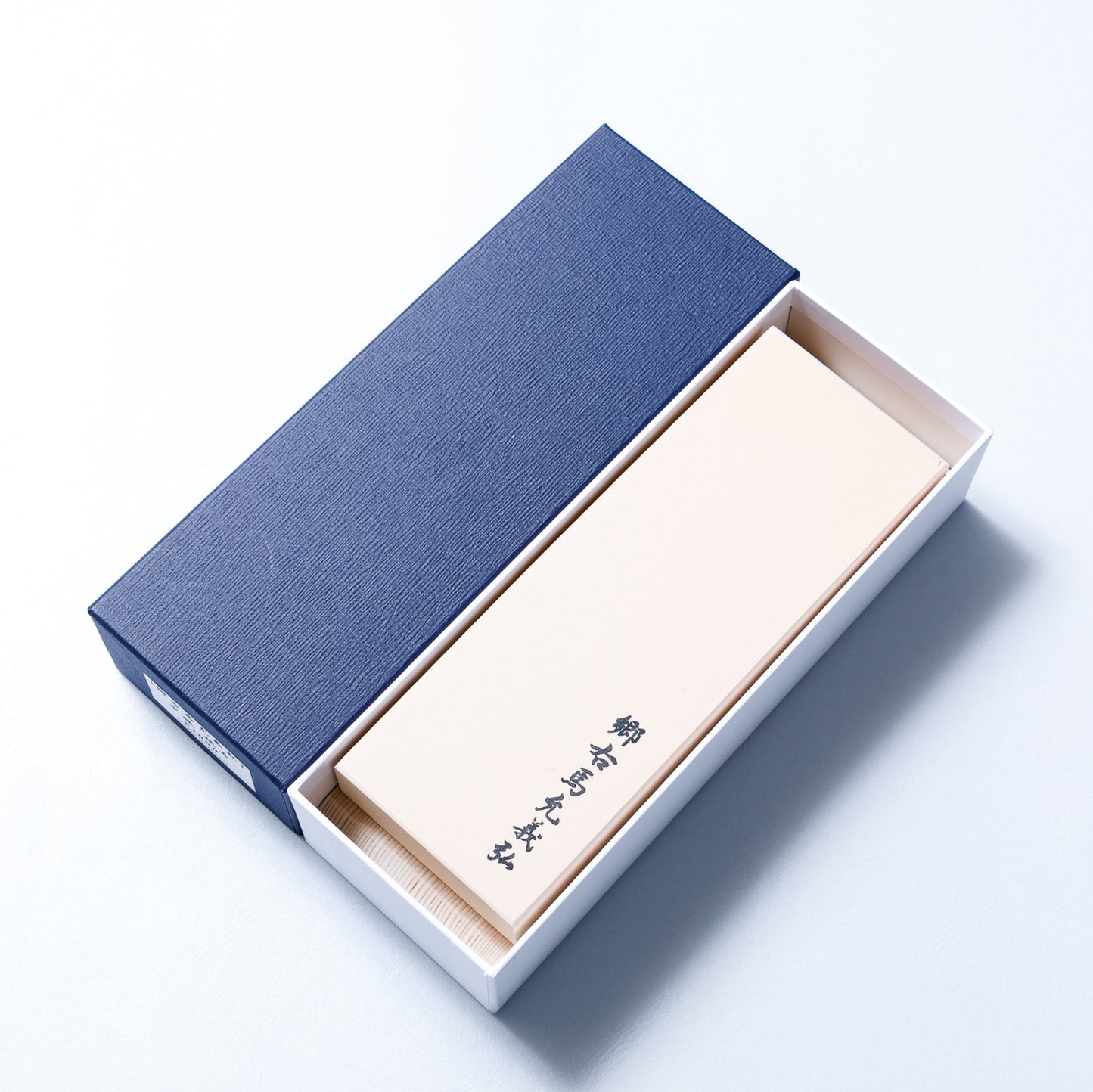
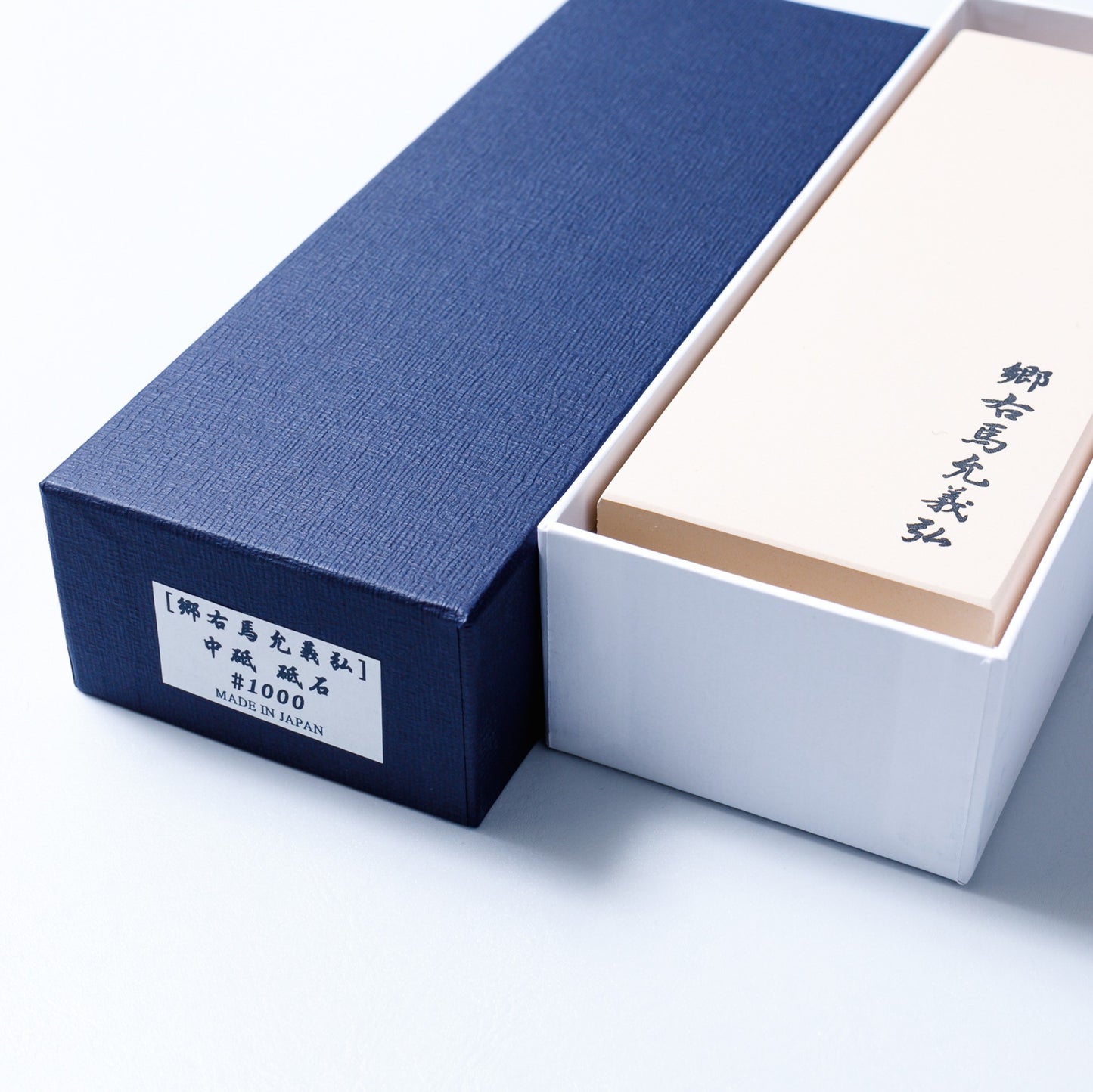
The whetstone carries the name Go Umanojo Yoshihiro.
It is made by a ceramic process, which cuts faster than conventional stones.
It works particularly well on stainless steels such as VG1 and VG10.
It will also take on the harder carbon-steel knives that older stones struggled with, and bring up a satisfying edge quickly.
It is not too hard, meets the blade kindly, and grinds smoothly.
Because it is fired like pottery, the material does not change with age, and it will keep working the same way for years.
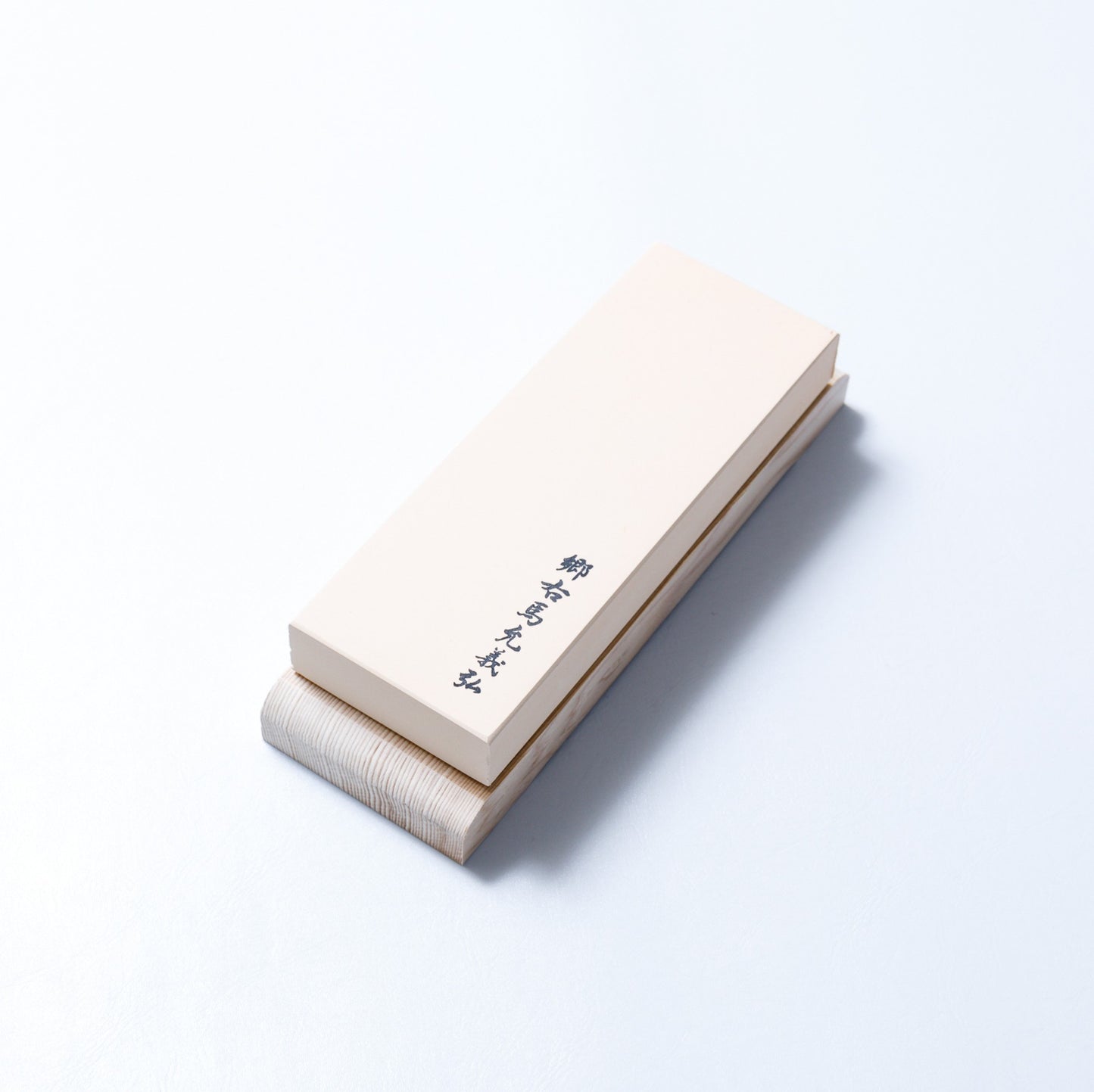
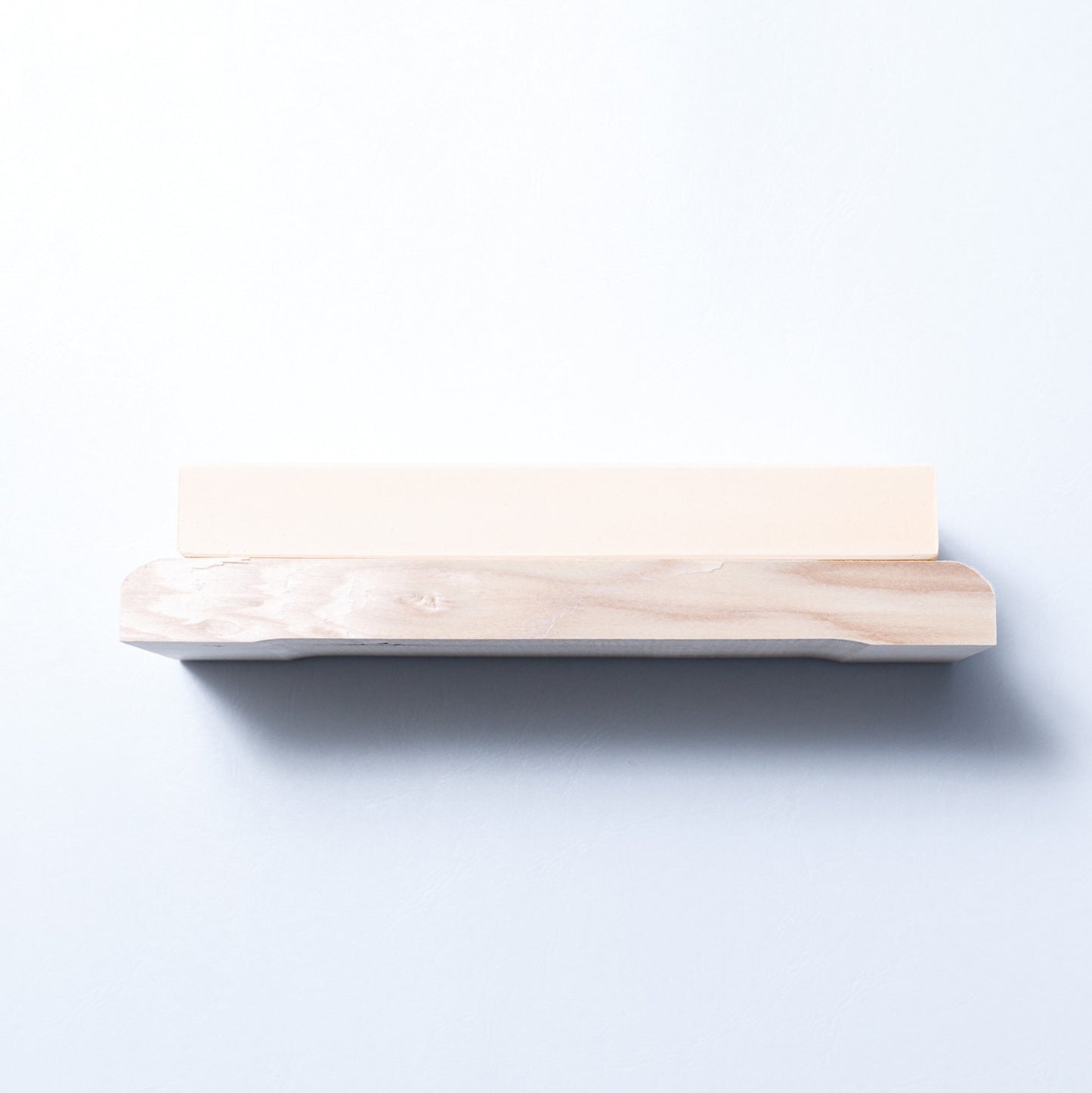
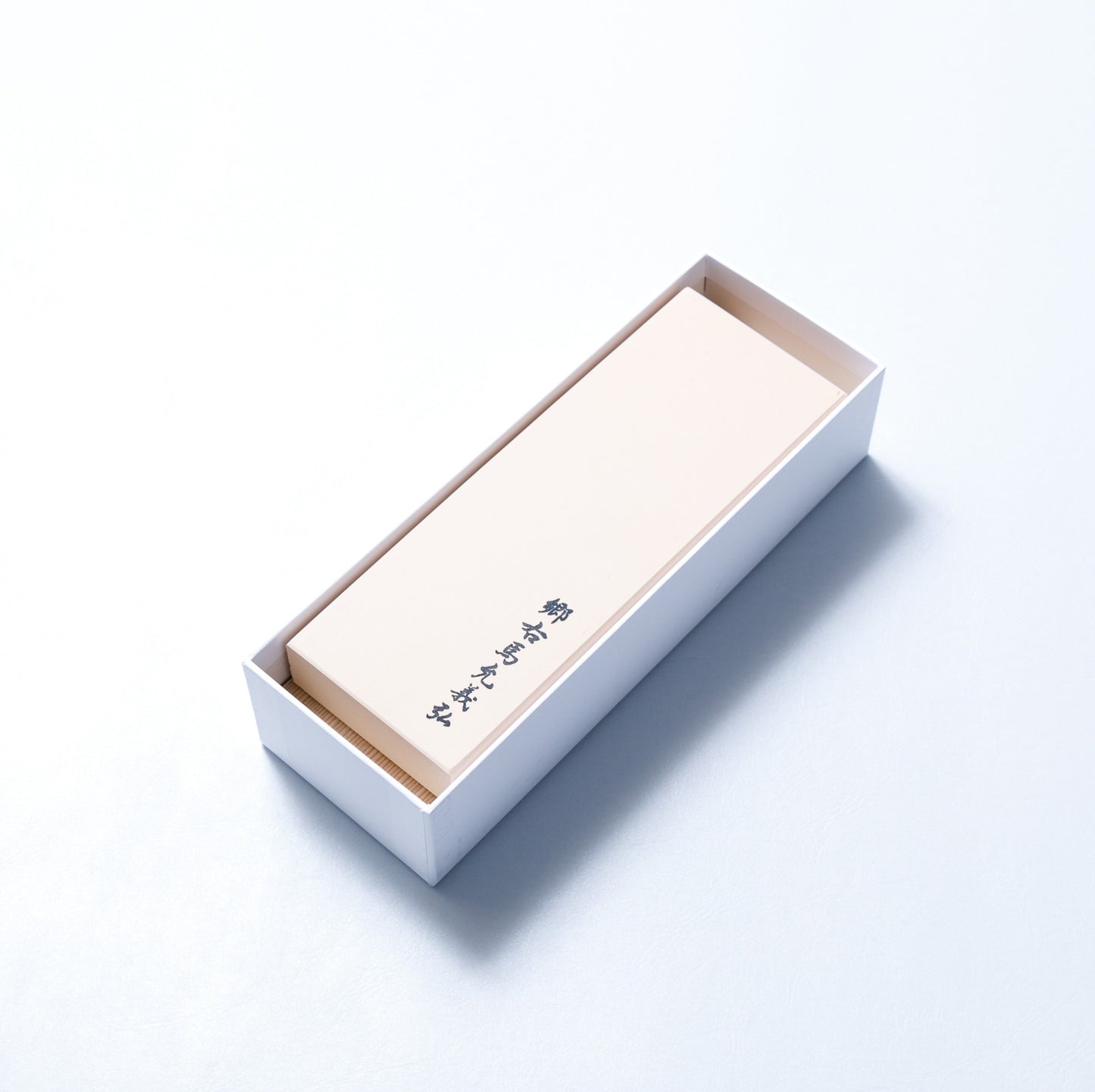
Supplied with a wooden base. Grits 1000 / 3000 / 8000.
Length 24cm × width 8cm × height 5cm.
How to choose a whetstone.
Before you choose, look at what your knife is made of and what condition the edge is in — the right stone depends on the steel.
On most knives sold today the steel is printed on the blade or listed on the packaging. If you cannot tell, check the maker's website.
Most knives are carbon steel or stainless, and hardness varies with the alloy, but all of them can be sharpened on a whetstone.
Every knife in the Indigo Bocho range can be sharpened on a whetstone.
(The exception to watch for is a knife made of something very hard, such as ceramic. A ceramic knife can only be sharpened on a diamond stone.)
Grit is simply a number for how coarse the surface of the stone is. The "#1000" or "#3000" on the packaging is the grit.
The smaller the number the coarser the stone; the larger the number the finer.
Stones come in different grits because it is more efficient to match the stone to the state of the blade.
Coarse stones are called arato, medium stones nakato, and finishing stones shiageto.
Coarse — arato (grit 100 to 600): cuts fast and takes a lot of steel off. Use it for real repairs, such as a chipped edge.
Medium — nakato (grit 800 to 3000): cuts at a sensible rate without eating the blade. Use it when the edge has gone dull, or after a repair on a coarse stone. This is the balanced one.
Finishing — shiageto (grit 5000 and up): cuts slowly and takes little steel. Use it to refine an edge from a medium stone, or when you want to push the edge further.
So: if the edge is chipped or damaged, start on a coarse stone and work the chip out. Then move to a medium stone to smooth it and bring the knife back to normal.
For home cooking that is enough. Professionals go on to a finishing stone for a finer edge, because it shows in the cut face of the food.
For most households, one medium stone at #1000 is all you need.
The photograph shows the #1000 stone.
The #3000 and #8000 stones are slightly different in color.
The #8000 comes with a nagura stone for flattening the surface.